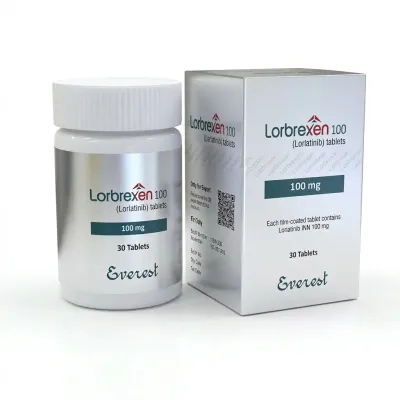
Lorlatinib: ALK Inhibitor for Non-Small Cell Lung Cancer
Lorlatinib is a third-generation, potent and selective inhibitor of anaplastic lymphoma kinase (ALK) and c-ros oncogene 1 (ROS1) tyrosine kinases. It was specifically designed to overcome resistance mutations that emerge during treatment with first- and second-generation ALK inhibitors (crizotinib, ceritinib, alectinib, brigatinib).
Lorlatinib demonstrates excellent central nervous system (CNS) penetration, making it particularly effective against brain metastases — a common complication of ALK-positive lung cancer. On Unifarm, you can find details regarding original medications (such as Lorbrena) containing this active ingredient.

Indications
- ALK-Positive Metastatic Non-Small Cell Lung Cancer (NSCLC) — First-Line: Treatment of adult patients with ALK-positive metastatic NSCLC as detected by an FDA-approved test.
- ALK-Positive Metastatic NSCLC — Previously Treated: Treatment of adult patients whose disease has progressed on crizotinib and at least one other ALK inhibitor, or whose disease has progressed on alectinib or ceritinib as the first ALK inhibitor therapy.
Dosage and administration
Available as film-coated tablets. Taken orally once daily.
Standard Regimen:
- Recommended Dose: 100 mg orally once daily.
- Administration: Swallow tablets whole with water. May be taken with or without food. Do not chew, crush, or split tablets.
- Dose Reduction: For adverse reactions, the dose may be reduced to 75 mg, then to 50 mg once daily.
Treatment should continue until disease progression or unacceptable toxicity. Strong CYP3A4 inducers (e.g., rifampin) must be avoided as they significantly reduce lorlatinib exposure. Regular monitoring of cholesterol, triglycerides, and CNS function is recommended.
- Hypersensitivity to lorlatinib or any excipient.
- Concomitant use with strong CYP3A4 inducers (rifampin, carbamazepine, phenytoin, St. John's wort).
- Pregnancy and breastfeeding (can cause fetal harm).
- Severe hepatic impairment (dose adjustment required).
Regular monitoring of lipid levels, ECG (PR interval), and neurocognitive function is essential during lorlatinib therapy. Common adverse reactions include:
- Metabolic: Hypercholesterolemia and hypertriglyceridemia (very common; may require lipid-lowering therapy).
- Neurologic: Cognitive effects (memory impairment, confusion, speech difficulties), peripheral neuropathy.
- Psychiatric: Mood effects (mood changes, irritability), psychotic effects (rare), anxiety.
- Gastrointestinal: Diarrhea, nausea, constipation.
- Edema: Peripheral edema, facial edema, generalized edema.
- Cardiovascular: PR interval prolongation, atrioventricular block.
- General: Fatigue, weight gain, arthralgia, myalgia.
- Hematologic: Anemia.