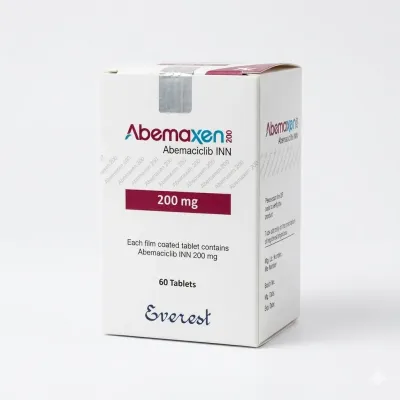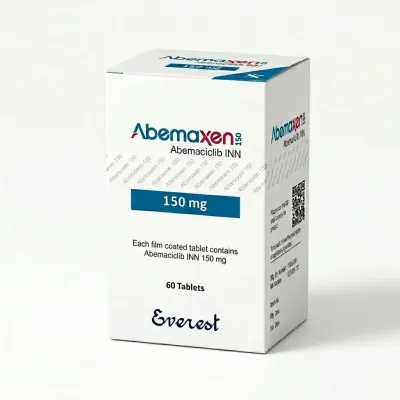
Abemaciclib (Verzenio): CDK4/6 Inhibitor for Breast Cancer
Abemaciclib is a targeted therapy used for the treatment of hormone receptor-positive (HR+), human epidermal growth factor receptor 2-negative (HER2-) breast cancer. It belongs to the class of CDK4/6 inhibitors.
Abemaciclib (Verzenio) works by selectively inhibiting cyclin-dependent kinases 4 and 6. These proteins are critical for cell division. By blocking them, the drug arrests the cancer cells in the G1 phase of the cell cycle, effectively stopping tumor growth.
A distinctive feature of Abemaciclib compared to other CDK4/6 inhibitors is its continuous dosing schedule (no break weeks) and its ability to be used as a monotherapy in certain settings.

Indications
- Advanced or Metastatic Breast Cancer (HR+/HER2-):
- In combination with an aromatase inhibitor or fulvestrant as initial endocrine-based therapy or following disease progression.
- As monotherapy for patients with disease progression after endocrine therapy and prior chemotherapy.
- Early Breast Cancer: Adjuvant treatment for adult patients with node-positive, high-risk early breast cancer.
Dosage and administration
Adherence to the schedule is crucial. Taken continuously.
- Standard Dose (Combination): 150 mg taken orally twice daily.
- Monotherapy Dose: 200 mg taken twice daily.
- Administration: Swallow tablets whole with water. Can be taken with or without food. Do not chew, crush, or split.
- Dietary Restrictions: Avoid grapefruit and grapefruit juice.
- Pregnancy and Breastfeeding: Can cause fetal harm. Effective contraception is required.
- Severe hypersensitivity to abemaciclib.
- Severe hepatic impairment (requires dose adjustment).
Gastrointestinal management is key with this medication.
- Diarrhea (Very Common): This is the most frequent side effect. Patients are instructed to start anti-diarrheal therapy (e.g., loperamide) at the first sign of loose stools and increase fluid intake.
- Neutropenia: Low white blood cell count (less common than with palbociclib/ribociclib but still significant).
- Venous Thromboembolism: Increased risk of blood clots.
- Fatigue and Nausea.