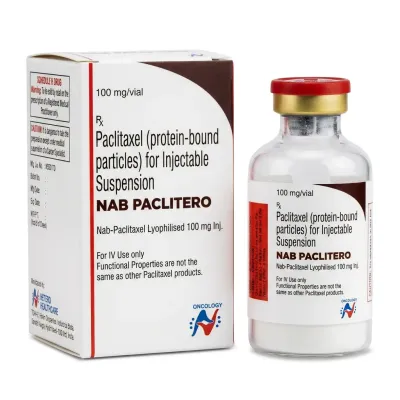
Nab-paclitaxel: Albumin-bound drugs list & guide
Nab-paclitaxel (Nanoparticle Albumin-Bound Paclitaxel) is an innovative chemotherapy formulation where paclitaxel is bound to human albumin protein. This nanotechnology allows for targeted drug delivery into the tumor using the body's natural transport pathways, often overcoming cancer cell resistance.
Unlike conventional paclitaxel, Nab-paclitaxel is solvent-free (no Cremophor EL), which significantly reduces the risk of severe hypersensitivity reactions and eliminates the need for corticosteroid premedication. On Unifarm, you can find a list of available medications utilizing this advanced technology.
Indications
- Metastatic Breast Cancer: As monotherapy for patients who have failed first-line treatment or standard therapy.
- Metastatic Adenocarcinoma of the Pancreas: In combination with gemcitabine as a first-line treatment.
- Non-Small Cell Lung Cancer (NSCLC): In combination with carboplatin for patients who are not candidates for curative surgery or radiation therapy.
Dosage and administration
Administered via intravenous infusion. Dosage is calculated based on Body Surface Area (BSA, m²).
Standard Regimens (subject to physician's adjustment):
- Breast Cancer: 260 mg/m² every 3 weeks (21-day cycle).
- Pancreatic Cancer: 125 mg/m² on days 1, 8, and 15 of a 28-day cycle.
- Lung Cancer (NSCLC): 100 mg/m² on days 1, 8, and 15 of a 21-day cycle.
Infusion time is shorter compared to standard paclitaxel (approx. 30–40 minutes).
- Hypersensitivity to paclitaxel or human albumin.
- Baseline neutropenia (neutrophil count < 1,500 cells/µL).
- Pregnancy and breastfeeding period.
- Severe hepatic impairment.
Due to the absence of solvents, tolerability is improved, but side effects may include:
- Nervous System: Peripheral neuropathy (numbness and tingling in extremities).
- Hematologic: Neutropenia, anemia, thrombocytopenia (requires regular blood monitoring).
- Gastrointestinal: Nausea, diarrhea, vomiting.
- General: Alopecia (hair loss), fatigue, asthenia.