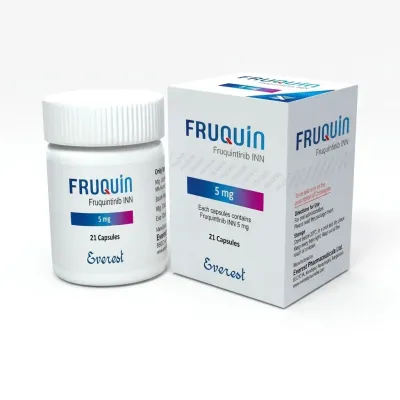
Fruquintinib (Fruzaqla): Treatment for Metastatic Colorectal Cancer
Fruquintinib is a potent, highly selective oral inhibitor of vascular endothelial growth factor receptors (VEGFR) -1, -2, and -3. Its primary mechanism is to inhibit tumor angiogenesis—essentially cutting off the blood supply that the cancer needs to grow and spread.
Fruquintinib (Fruzaqla) is designed to have higher selectivity than other drugs in its class, which allows for potent inhibition of the tumor while potentially minimizing "off-target" toxicities.
It provides a crucial treatment option for patients with metastatic colorectal cancer who have progressed on or are intolerant to standard chemotherapy and biologic agents.

Indications
- Metastatic Colorectal Cancer (mCRC): Treatment of adult patients who have been previously treated with fluoropyrimidine-, oxaliplatin-, and irinotecan-based chemotherapy, an anti-VEGF therapy, and, if RAS wild-type, an anti-EGFR therapy.
Dosage and administration
The dosing schedule follows a specific cycle to balance efficacy and recovery.
- 28-Day Cycle:
- Take the medication for 21 consecutive days (3 weeks).
- Follow with 7 days off treatment (1 week rest).
- Daily Dose: 5 mg taken orally once daily.
- Administration: Swallow the capsule whole with water. Can be taken with or without food. Take at approximately the same time each day.
- Severe Hypertension: Uncontrolled high blood pressure.
- Pregnancy and Breastfeeding: Based on its mechanism of action, fruquintinib can cause fetal harm.
- Severe hypersensitivity to the active substance or excipients.
Monitoring blood pressure is critical during treatment.
- Hypertension: High blood pressure is the most common adverse reaction. Regular monitoring is required.
- Dysphonia: Hoarseness or voice changes.
- Hand-Foot Skin Reaction: Redness, swelling, or pain on the palms of hands and soles of feet (Palmar-plantar erythrodysaesthesia).
- Proteinuria: Presence of protein in the urine.