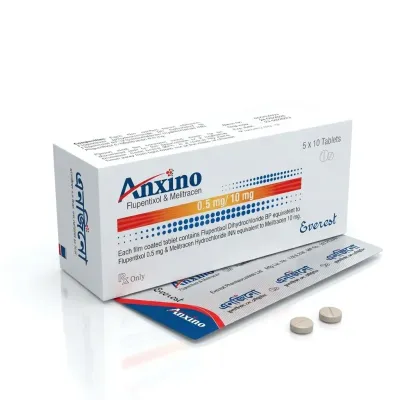
Flupentixol: Antipsychotic for Schizophrenia
Flupentixol is an antipsychotic medication belonging to the thioxanthene class of typical (first-generation) neuroleptics. The drug blocks dopamine D1 and D2 receptors as well as serotonin 5-HT2A receptors in the central nervous system, producing antipsychotic, anxiolytic, and antidepressant effects depending on the dose.
At low doses, flupentixol has an activating and antidepressant effect, while at higher doses it exerts a pronounced antipsychotic action. The drug is available in both oral and depot injection formulations for long-term maintenance therapy. On Unifarm, you can find generic versions of medications (such as Fluanxol) containing this active ingredient.

Indications
- Schizophrenia and Other Psychotic Disorders: Treatment of acute and chronic psychoses, including schizophrenia, as well as maintenance therapy for relapse prevention.
- Depression: Treatment of mild-to-moderate depressive disorders (at low doses), particularly when accompanied by anxiety, apathy, and asthenia.
- Anxiety Disorders: Short-term treatment of anxiety and psychosomatic conditions (at low doses) when other treatments are ineffective.
Dosage and administration
Available as tablets and solution for intramuscular injection (depot formulation — flupentixol decanoate).
Oral formulation:
- Depression and anxiety (low doses): 0.5–3 mg daily, usually in the morning. Maximum dose for these indications — 3 mg/day.
- Psychoses (moderate to high doses): Starting dose — 3–15 mg daily, divided into 2–3 doses. Up to 18 mg/day if necessary. Maintenance dose is individualized.
Depot injection (flupentixol decanoate):
- Initial dose: 20 mg intramuscularly (test dose).
- Maintenance dose: 20–40 mg every 2–4 weeks. Maximum dose — 400 mg every 2 weeks (in exceptional cases).
Tablets should be taken in the morning or early afternoon, as the drug has an activating effect at low doses and may cause insomnia if taken in the evening.
- Hypersensitivity to flupentixol, other thioxanthenes, or any component of the product.
- CNS depression (comatose states, acute alcohol or drug intoxication).
- Circulatory collapse, vascular shock.
- Pheochromocytoma.
- Blood dyscrasias.
- Pregnancy and breastfeeding (use only when strictly necessary).
- High-dose use in depression (antidepressant effect occurs only at low doses; high doses may worsen depression).
As with other typical antipsychotics, flupentixol requires monitoring of neurological status, body weight, and metabolic parameters. Common adverse reactions include:
- Extrapyramidal symptoms: Akathisia, dystonia, parkinsonism (especially early in treatment and at higher doses); tardive dyskinesia (with prolonged use).
- Neurologic: Drowsiness, dizziness, insomnia (at low doses due to activating effect), headache.
- Metabolic: Weight gain, elevated glucose and lipid levels.
- Endocrine: Hyperprolactinemia (menstrual irregularities, galactorrhea, gynecomastia, decreased libido).
- Cardiovascular: Orthostatic hypotension, tachycardia, QT prolongation (rare).
- Autonomic: Dry mouth, constipation, urinary retention, blurred vision.
- Neuroleptic malignant syndrome: Rare but potentially life-threatening (hyperthermia, muscle rigidity, altered consciousness).
- General: Fatigue, asthenia.