
Capivasertib (Truqap): AKT Inhibitor for Breast Cancer
Capivasertib is a breakthrough for breast cancer patients whose tumors have developed resistance to standard hormonal therapy. Cancer often finds "detours" to survive, and the AKT signaling pathway is a major escape route. When activated, it allows the tumor to grow despite treatment.
Capivasertib (Truqap) is a first-in-class, potent AKT inhibitor. It blocks this critical survival pathway. Used in combination with fulvestrant, it re-sensitizes the tumor to endocrine therapy, significantly delaying disease progression.
It is an oral targeted therapy with a unique intermittent dosing schedule designed to balance efficacy and tolerability.

Indications
- HR+/HER2- Breast Cancer: Treatment of adult patients with locally advanced or metastatic breast cancer following recurrence or progression on endocrine-based regimen.
- Biomarker Requirement: Approved for patients with one or more specific genetic alterations: PIK3CA, AKT1, or PTEN. A companion diagnostic test is required to confirm eligibility.
Dosage and administration
Capivasertib follows a strict weekly schedule.
- "4 Days On, 3 Days Off" Schedule: Take the tablets for 4 consecutive days, followed by 3 days of rest every week.
- Example: Take on Mon, Tue, Wed, Thu. No pills on Fri, Sat, Sun.
- Daily Dose: 400 mg taken twice daily (morning and evening) during the dosing days, roughly 12 hours apart.
- Instructions: Swallow whole with water, with or without food.
- Diabetes: Severe uncontrolled high blood sugar (the drug carries a high risk of hyperglycemia).
- Pregnancy and breastfeeding (teratogenic risk).
- Severe hypersensitivity.
Metabolic and gastrointestinal effects are key concerns.
- Diarrhea (Very Common): Hydration is essential. Your doctor may recommend anti-diarrheal medication.
- Hyperglycemia (High Blood Sugar): Capivasertib interferes with insulin pathways. Regular blood glucose monitoring is mandatory. Some patients may need to start diabetes medication.
- Skin: Rash (cutaneous adverse reactions), itching.
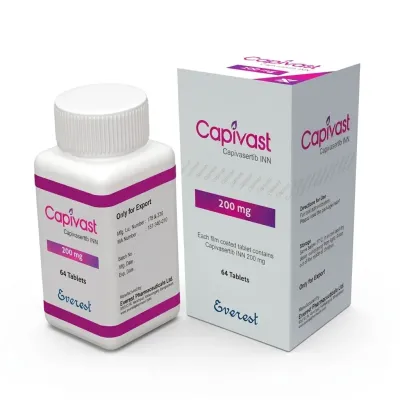
List of medicines by active substance Capivasertib
✅ All products loaded (1)