
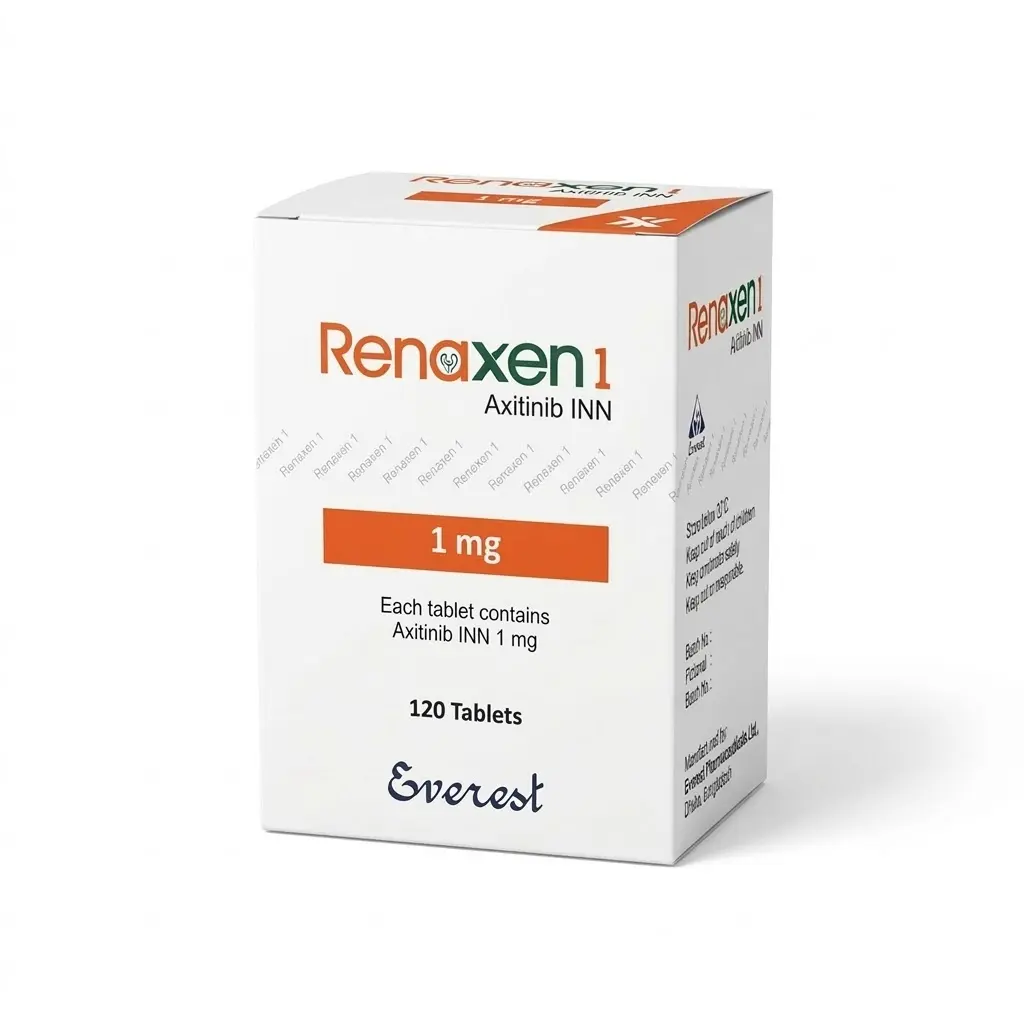
Renaxen 1 Tablets — Axitinib 1 mg (120 Tabs) Everest
Renaxen 1 mg (Axitinib) is a potent and selective tyrosine kinase inhibitor targeting vascular endothelial growth factor receptors (VEGFR-1, -2, and -3). It acts as a generic equivalent to Inlyta. By inhibiting these receptors, Axitinib blocks angiogenesis (the formation of new blood vessels), effectively starving the tumor of nutrients and oxygen.
Manufacturer: Everest Pharmaceuticals (Bangladesh). The 1 mg strength is specifically useful for dose titration and management of adverse reactions.
Key Features:
- ✅ Anti-Angiogenic: Directly halts the blood supply to the tumor.
- ✅ Advanced RCC Therapy: Proven efficacy in treating kidney cancer after failure of prior systemic treatments.
- ✅ Dosage Flexibility: Low-dose 1 mg tablets allow for precise dose reduction or adjustment as mandated by the patient's tolerance.
Prescribed by oncologists for the treatment of adult patients with:
- 🔹 Advanced Renal Cell Carcinoma (RCC): Specifically indicated after failure of one prior systemic therapy (e.g., sunitinib or cytokine-based regimens).
Sales Unit: Box containing 120 tablets (1 mg strength).
⚠️ APPLICATION INSTRUCTIONS:
- Standard Starting Dose: Typically 5 mg taken orally twice daily. Note: Since these are 1 mg tablets, multiple tablets may be required to reach the prescribed dose. Always follow your oncologist's count.
- Use of 1 mg: Often prescribed when a patient needs to reduce the dose (e.g., to 3 mg or 2 mg BID) due to side effects.
- Administration: Take doses approximately 12 hours apart. Can be taken with or without food. Swallow whole with a full glass of water.
- ✋ Missed Dose: If a dose is missed or vomiting occurs, do not take an extra dose. Resume the regular schedule at the next time.
- ⛔ Pregnancy & Breastfeeding: Strictly contraindicated. Can cause fetal harm.
- Hypersensitivity to Axitinib.
- Severe hepatic impairment (Child-Pugh Class C).
- History of arterial thromboembolic events (stroke, heart attack) within the last 12 months.
- Uncontrolled hypertension.
Blood pressure and thyroid function must be monitored regularly. Potential side effects include:
- 📈 Hypertension: High blood pressure (very common).
- 🤢 Gastrointestinal: Diarrhea, nausea, vomiting, decreased appetite.
- 🗣️ Dysphonia: Hoarseness or voice changes.
- 🦋 Thyroid: Hypothyroidism (low thyroid hormone levels).
- ✋ Skin: Hand-Foot Syndrome (Palmar-plantar erythrodysesthesia).
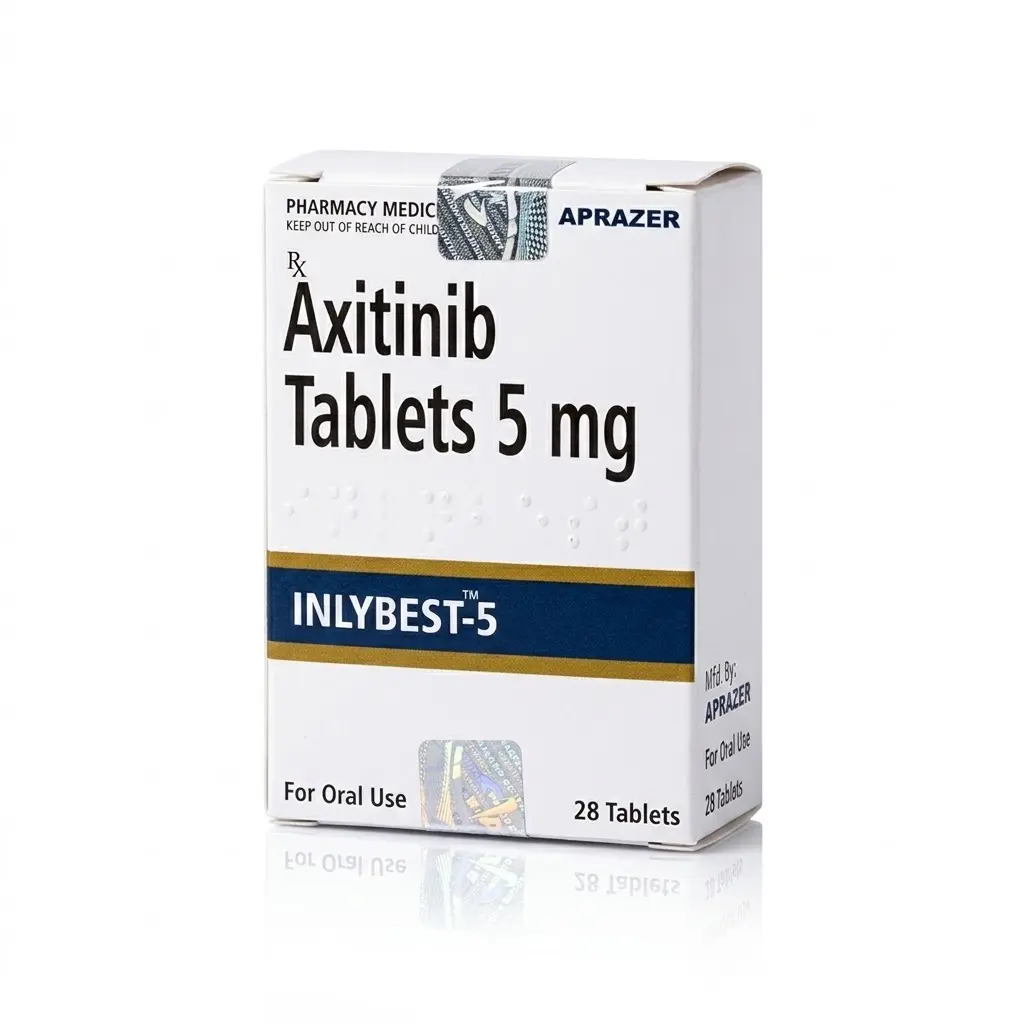
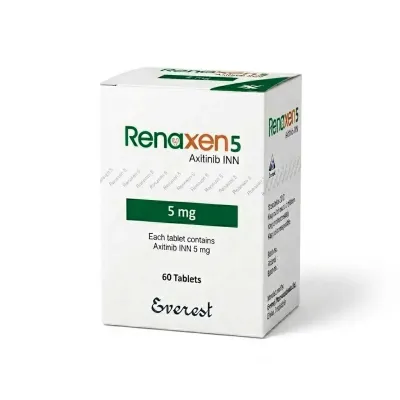
What Customers Say
No reviews yet
Your review can be the first!