
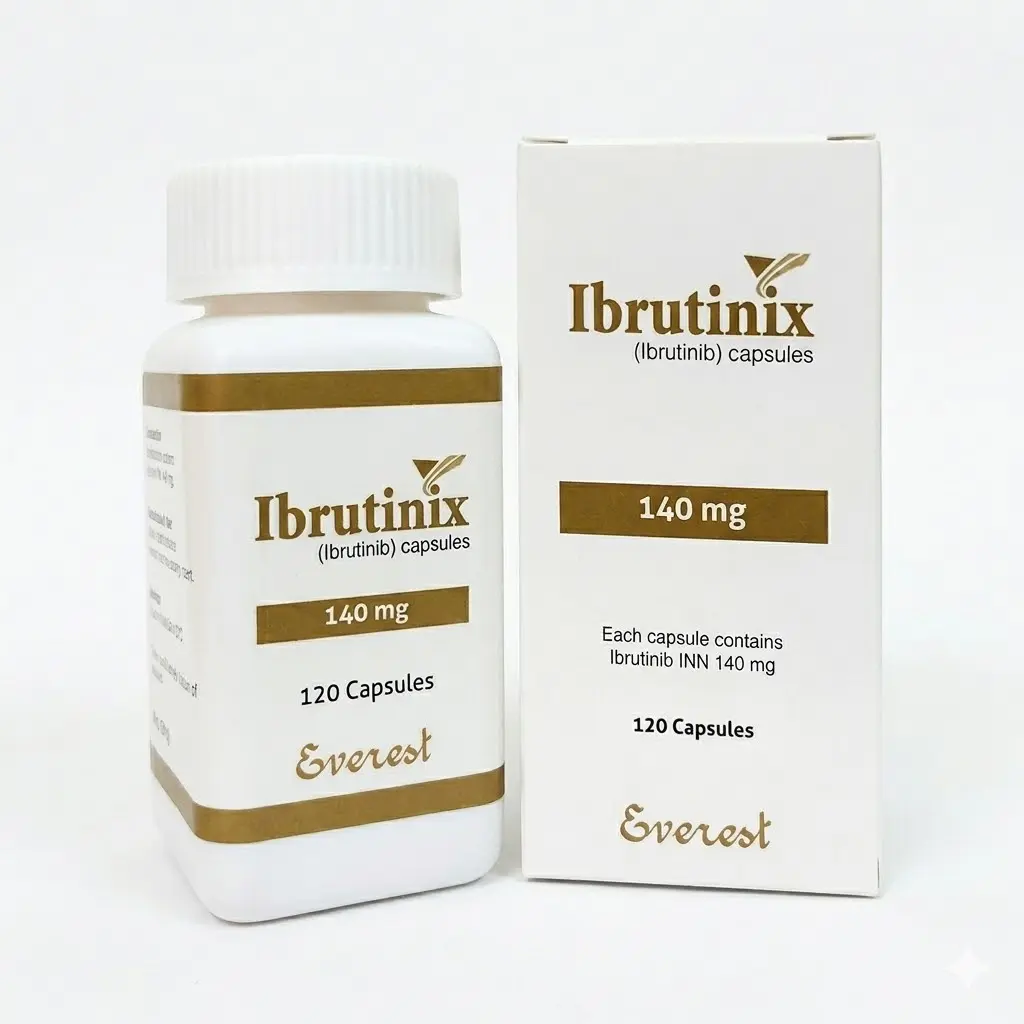
Ibrutinix Capsules — Ibrutinib 140 mg (120 Caps) Everest
25897₴
28092₴
-8%
Ibrutinix 140 mg (Ibrutinib) is a targeted therapy drug, a Bruton's tyrosine kinase (BTK) inhibitor, and a generic equivalent to Imbruvica. It works by blocking specific chemical signals that cancer cells use to grow and survive.
Manufacturer: Everest Pharmaceuticals (Bangladesh). Ibrutinib represents a major breakthrough in treating B-cell malignancies without traditional chemotherapy.
Key Features:
- ✅ Mechanism: Irreversibly binds to the BTK protein, inhibiting the proliferation of malignant B-cells.
- ✅ Broad Application: Effective across several types of blood cancers, including CLL and Mantle Cell Lymphoma.
- ✅ Oral Therapy: Convenient once-daily capsule administration.
Prescribed by hematologists/oncologists for adult patients with:
- 🔹 Chronic Lymphocytic Leukemia (CLL) / Small Lymphocytic Lymphoma (SLL): Both first-line and relapsed/refractory cases.
- 🔹 Mantle Cell Lymphoma (MCL): For patients who have received at least one prior therapy.
- 🔹 Waldenström's Macroglobulinemia (WM).
- 🔹 Chronic Graft-Versus-Host Disease (cGVHD): After failure of systemic therapy.
Sales Unit: Bottle containing 120 capsules (140 mg strength).
⚠️ APPLICATION INSTRUCTIONS:
- Dosage: Typically 420 mg (3 capsules) for CLL/WM or 560 mg (4 capsules) for MCL, taken once daily. Follow your doctor's exact prescription.
- Administration: Swallow capsules whole with a glass of water. Do not open, break, or chew. Take at the same time each day.
- Dietary Warning: Avoid grapefruit and Seville oranges, as they can dangerously increase the drug level in your blood.
- ✋ Surgery: Must be stopped 3-7 days before any surgery or dental procedure due to bleeding risk.
- ⛔ Pregnancy & Breastfeeding: Strictly contraindicated.
- Hypersensitivity to Ibrutinib.
- Severe hepatic (liver) impairment.
- Children (under 18 years).
- Concomitant use with strong CYP3A inhibitors or preparations containing St. John's Wort.
Monitoring for bleeding and heart rhythm is essential. Potential side effects:
- 🩸 Hemorrhage: Bruising, nosebleeds, or prolonged bleeding from minor cuts.
- ❤️ Cardiac: Atrial fibrillation or flutter (irregular heartbeat).
- 🦠 Infections: Increased risk of upper respiratory tract infections.
- 🤢 Digestive: Diarrhea (very common), nausea. Hydration is key.
100% original product
Delivery across Ukraine
Customer reviews
What Customers Say
No reviews yet
Your review can be the first!