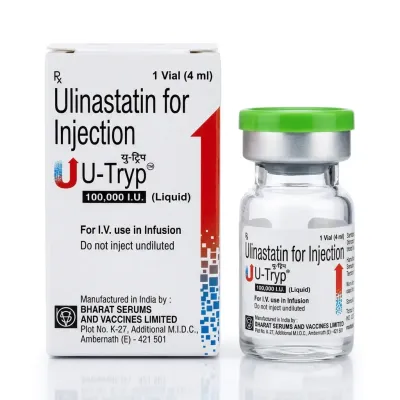
Ulinastatin: Drug for Pancreatitis & Inflammation
Ulinastatin is a potent proteolytic enzyme inhibitor derived from human urine or produced via recombinant technology. It functions by inhibiting the activity of various proteases (including trypsin, elastase, and chymotrypsin) that cause tissue damage during severe inflammatory responses.
The substance is widely used in critical care and surgery to prevent systemic inflammation and organ failure. On Unifarm, you can browse the list of available medications containing this active ingredient.
Indications
- Acute Pancreatitis: To prevent pancreatic tissue necrosis and reduce systemic toxicity.
- Chronic Pancreatitis Exacerbation: To manage acute inflammation episodes.
- Systemic Inflammatory Response Syndrome (SIRS): Associated with severe burns, sepsis, or major surgery (depending on specific regional approvals).
Dosage and administration
Ulinastatin medications are administered exclusively via intravenous infusion (IV drip). Dosage and administration rate depend on the severity of the patient's condition.
Typical Regimen:
- Commonly prescribed at 100,000 – 200,000 IU (International Units) 1–3 times daily.
- The drug is dissolved in 5% glucose solution or 0.9% sodium chloride solution.
- Infusion duration typically lasts about 1–2 hours.
The treatment course is determined by a physician based on blood biochemistry dynamics.
- Hypersensitivity to Ulinastatin or other protein preparations.
- Severe renal or hepatic impairment (use with caution).
- Pregnancy and breastfeeding (safety not established; used only if benefits outweigh risks).
- Children (safety and efficacy profiles vary by region).
Therapy is generally well-tolerated, but reactions may occur:
- Allergic reactions: Skin rash, itching, rarely — anaphylactic shock.
- Gastrointestinal: Nausea, vomiting, diarrhea.
- Laboratory findings: Elevated liver transaminases (ALT, AST), leukopenia.
- Local reactions: Pain or redness at the injection site.