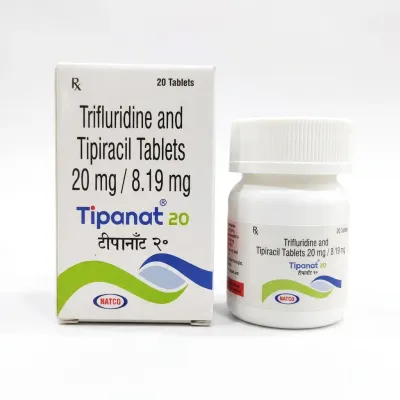
Trifluridine: Antineoplastic drugs list & guide
Trifluridine is an antineoplastic agent belonging to the antimetabolite class. Structurally similar to thymidine (a DNA component), it penetrates cancer cells and incorporates directly into the DNA strand. This disrupts DNA function and effectively blocks further tumor replication.
The substance is utilized in modern oncology to combat aggressive forms of gastrointestinal cancer when prior lines of therapy have failed. On Unifarm, you can find a list of medications containing this active ingredient.

Indications
- Metastatic Colorectal Cancer: In adult patients resistant to standard chemotherapy regimens.
- Metastatic Gastric Cancer or Gastroesophageal Junction Adenocarcinoma: In patients who have received at least two prior systemic therapy regimens.
Dosage and administration
Trifluridine-based medications are taken orally. It is crucial to adhere to the administration schedule regarding meals (typically within 1 hour after breakfast and dinner).
Typical Cycle Schedule (28 days):
- Days 1–5 and 8–12: Medication is taken twice daily.
- Days 6–7 and 13–28: Rest period (no medication taken).
The exact dosage is calculated by a physician based on the patient's body surface area.
- Hypersensitivity to Trifluridine.
- Severe renal impairment (requires dose adjustment or discontinuation).
- Severe hepatic impairment.
- Pregnancy and breastfeeding (high toxicity to the fetus).
- Age under 18 years.
Therapy requires monitoring of blood counts and general health:
- Hematologic: Neutropenia (lowered immunity), anemia, thrombocytopenia.
- Gastrointestinal: Nausea, vomiting, decreased appetite, diarrhea.
- General: Severe fatigue, weakness, fever.