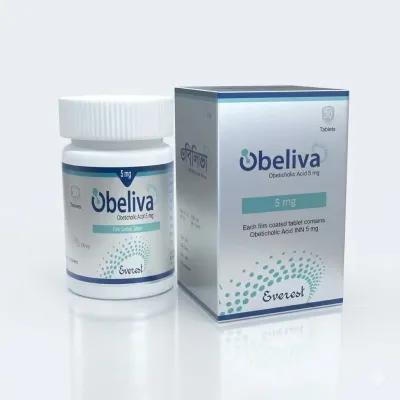
Obeticholic Acid: Primary Biliary Cholangitis Treatment
Obeticholic Acid is a semi-synthetic bile acid analogue and a potent agonist of the farnesoid X receptor (FXR). By activating FXR, it regulates bile acid synthesis and transport, effectively reducing the exposure of the liver to toxic levels of bile acids.
It serves as a critical second-line therapy for Primary Biliary Cholangitis (PBC). On Unifarm, you can find details regarding medications (such as Ocaliva) containing this active ingredient.

Indications
- Primary Biliary Cholangitis (PBC):
- In combination with ursodeoxycholic acid (UDCA) in adults with an inadequate response to UDCA.
- As monotherapy in adults unable to tolerate UDCA.
Dosage and administration
Taken orally, with or without food. Strict adherence to the titration schedule is crucial to manage pruritus (itching).
Standard Regimen:
- Starting Dose: 5 mg once daily.
- Adjustment: After 6 months, if well-tolerated but response is inadequate, increase to 10 mg once daily.
- Maximum Dose: 10 mg daily.
Patients with moderate to severe hepatic impairment (Child-Pugh B or C) require a modified dosing schedule (e.g., once weekly).
- Complete biliary obstruction.
- Decompensated cirrhosis (e.g., prior ascites, variceal bleeding, hepatic encephalopathy).
- Severe hepatic failure (requires extreme caution and dose modification).
- Hypersensitivity to the active substance.
The most common adverse reaction is dose-dependent pruritus (itching). Other effects include:
- Skin: Severe pruritus, rash.
- General: Fatigue.
- Gastrointestinal: Abdominal pain, discomfort.
- Hepatic: Risk of liver decompensation in cirrhotic patients (requires immediate discontinuation if liver function worsens).
- Musculoskeletal: Arthralgia.