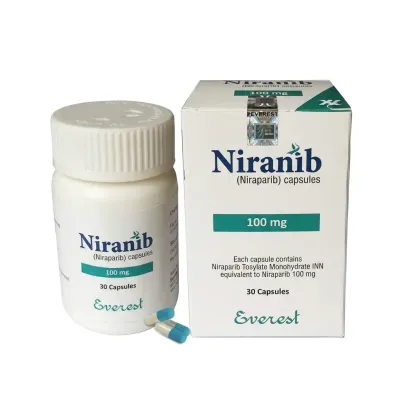
Niraparib: Ovarian cancer drugs list & full guide
Niraparib is a highly selective PARP (poly (ADP-ribose) polymerase) inhibitor used as a targeted cancer therapy. Its mechanism involves blocking the repair of damaged DNA within cancer cells, leading to cell death (synthetic lethality).
A unique feature of Niraparib is its efficacy regardless of BRCA mutation status. It serves as a "gold standard" for maintenance therapy, significantly extending remission periods following chemotherapy. On Unifarm, you will find a current list of medications containing this active substance.

Indications
- Ovarian, Fallopian Tube, and Primary Peritoneal Cancer: Maintenance monotherapy in adult patients.
- Indicated for recurrent epithelial cancer that is sensitive to platinum-based chemotherapy.
- Used both after first-line chemotherapy and in recurrent settings to sustain treatment response.
Dosage and administration
Taken orally (capsules/tablets) once daily, preferably at the same time each day. Taking the dose at bedtime may help manage nausea.
Standard Regimen:
- Recommended Dose: 300 mg (three 100 mg capsules) once daily.
- For patients weighing < 77 kg or with platelets < 150,000/µL: The starting dose is reduced to 200 mg once daily.
Treatment continues as long as clinical benefit is observed.
- Hypersensitivity to the active substance or excipients.
- Pregnancy and breastfeeding (due to genotoxicity and potential harm to the fetus).
- Pediatric use under 18 years of age.
- Severe hepatic or renal impairment (requires caution).
Blood count monitoring is critical during therapy (weekly for the first month):
- Hematologic: Thrombocytopenia (low platelets), anemia, neutropenia.
- Gastrointestinal: Nausea, constipation, vomiting, abdominal pain.
- Cardiovascular: Hypertension (high blood pressure), palpitations.
- General: Fatigue, insomnia, headache.